17
Major Industries in India: Growth, Opportunities and Their Importance to the Economy
Major Industries in India: Growth, Opportunities and Their Importance to the Economy
Major Industries in India: Growth, Opportunities and Their Importance to the Economy
India is one of the world's largest and fastest-growing economies, supported by a wide range of industries. From agriculture and manufacturing to technology, healthcare, automobiles, pharmaceuticals, textiles, construction, and renewable energy, different industries contribute to employment, investment, exports, and economic development.
The growth of industries is important not only for large companies but also for small businesses, entrepreneurs, workers, and local communities. As technology continues to develop and consumer demand changes, new opportunities are emerging across different sectors of the Indian economy.
1. Information Technology Industry
The Information Technology (IT) industry is one of India's most recognized sectors globally. Indian IT companies provide software development, cloud computing, cybersecurity, artificial intelligence, business services, consulting, and digital solutions to customers in India and abroad.
The growth of smartphones, cloud services, online businesses, and digital payments has increased demand for technology services. Indian cities such as Bengaluru, Hyderabad, Pune, Chennai, Mumbai, and Gurugram have become important technology and business centers.
The IT industry also provides employment opportunities for software developers, engineers, designers, analysts, project managers, and other professionals.
2. Automobile Industry
India has a large and diverse automobile industry that includes passenger vehicles, commercial vehicles, motorcycles, scooters, electric vehicles, and automotive components.
The industry supports a large network of manufacturers, suppliers, dealerships, service centers, logistics companies, and skilled workers. The increasing interest in electric vehicles is also encouraging companies to develop new technologies related to batteries, charging infrastructure, and electric mobility.
The automobile sector is therefore expected to remain an important part of India's manufacturing and transportation ecosystem.
3. Pharmaceutical Industry
India has a major pharmaceutical industry that produces medicines, generic drugs, vaccines, and other healthcare products. Indian pharmaceutical companies serve both domestic and international markets.
The sector is important for public health as well as exports. Pharmaceutical manufacturing also creates opportunities in research, production, quality control, packaging, logistics, and healthcare-related services.
As healthcare needs increase and medical technology develops, the pharmaceutical industry is likely to remain strategically important for the Indian economy.
4. Textile and Garment Industry
The textile and garment industry has a long history in India and continues to provide employment to millions of people. India produces cotton, silk, wool, synthetic fibers, fabrics, garments, and other textile products.
Major textile centers are spread across different parts of the country, creating opportunities for manufacturers, exporters, designers, artisans, and small businesses.
The sector also has strong connections with rural communities because agriculture and textile production are linked through cotton and other raw materials.
5. Agriculture and Food Processing
Agriculture remains an important part of India's economy and supports a large section of the population. India produces rice, wheat, pulses, fruits, vegetables, spices, dairy products, and many other agricultural commodities.
The food-processing industry adds value to agricultural products by converting raw materials into packaged and processed foods. This can create opportunities for farmers, food manufacturers, retailers, logistics companies, and exporters.
Cold storage, modern supply chains, food packaging, and processing technology can further improve efficiency and reduce wastage.
6. Construction and Real Estate
Construction is another major industry in India. Residential buildings, commercial properties, roads, bridges, railways, airports, factories, and other infrastructure projects require significant construction activity.
The industry supports architects, engineers, contractors, laborers, suppliers, equipment manufacturers, and many other businesses.
Urbanization and infrastructure development are important factors influencing construction demand. Growing cities and expanding transportation networks can create additional opportunities for the sector.
7. Renewable Energy Industry
India is increasingly focusing on renewable energy sources such as solar and wind power. The renewable energy industry is becoming important as the country seeks to expand electricity generation while reducing dependence on conventional energy sources.
Solar panel manufacturing, installation, maintenance, battery storage, and related services can create new employment and business opportunities.
The development of clean-energy technology may also encourage investment in electric mobility, energy storage, and modern power infrastructure.
8. Banking and Financial Services
The banking and financial services industry plays a central role in economic activity. Banks and financial institutions provide savings accounts, loans, payment services, investment products, insurance, and other financial services.
Digital banking and mobile payment systems have made financial services more accessible to many consumers and businesses. Fintech companies are also introducing technology-based solutions for payments, lending, investment, and financial management.
A strong financial sector helps businesses obtain capital and allows individuals to manage their money more efficiently.
9. Healthcare Industry
India's healthcare industry includes hospitals, clinics, diagnostic centers, medical equipment manufacturers, pharmaceutical companies, health-tech businesses, and healthcare professionals.
Demand for healthcare services continues to evolve as populations grow, cities expand, and awareness of health and wellness increases.
Technology is also changing healthcare through telemedicine, digital records, online consultations, diagnostic tools, and other innovations. These developments can improve access to healthcare while creating opportunities for businesses and professionals.
10. Tourism and Hospitality Industry
Tourism is another important industry with significant potential for employment and local economic development. India has historical monuments, religious destinations, beaches, mountains, wildlife areas, cultural attractions, and diverse food traditions.
The tourism and hospitality ecosystem includes hotels, restaurants, travel agencies, transportation providers, tour operators, and local businesses.
When tourism grows, it can generate income for communities and create opportunities for small businesses. Better infrastructure, digital booking services, and improved visitor facilities can further support the sector.
11. Electronics and Semiconductor Industry
Electronics manufacturing is becoming increasingly important as demand for smartphones, computers, appliances, communication equipment, and other electronic products grows.
The development of domestic manufacturing and semiconductor capabilities can help strengthen India's technology ecosystem. It can also create opportunities in component manufacturing, assembly, research, design, logistics, and skilled employment.
A stronger electronics industry may reduce dependence on imports for certain products while supporting India's position in global manufacturing.
12. Retail and E-Commerce
India's retail industry includes traditional shops, supermarkets, shopping centers, online marketplaces, direct-to-consumer brands, and many small businesses.
E-commerce has changed the way consumers discover and purchase products. Online shopping provides businesses with access to customers beyond their local markets.
Digital payments, logistics networks, social media marketing, and online advertising have further contributed to the growth of modern retail.
Importance of Industries for India's Economy
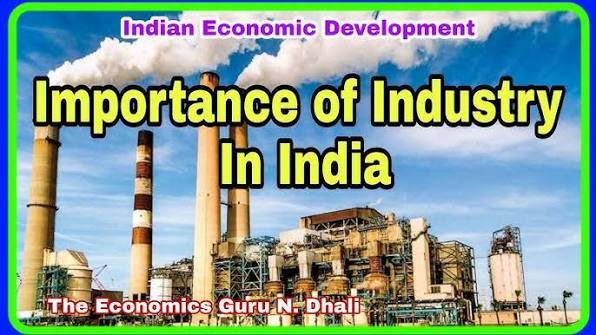
Industries contribute to India's economic development in several ways. They create employment, generate tax revenue, encourage investment, support exports, and develop infrastructure.
Industrial growth also creates demand for supporting businesses. For example, a manufacturing company may require transportation, packaging, software, maintenance, banking, insurance, and professional services. This creates a wider economic impact beyond the main industry itself.
Small and medium-sized businesses are particularly important because they often participate in supply chains and provide employment at the local and regional levels.
Future Opportunities
India's industrial landscape is changing rapidly. Artificial intelligence, automation, renewable energy, electric vehicles, digital finance, advanced manufacturing, biotechnology, and e-commerce are creating new opportunities.
At the same time, businesses may face challenges such as changing regulations, competition, skill shortages, infrastructure requirements, and technological changes. Companies that invest in innovation, workforce development, efficiency, and customer needs may be better positioned to adapt.
Government policies and private investment can also influence how quickly different industries develop. Infrastructure, education, technology, and access to finance will remain important factors in supporting long-term industrial growth.
Conclusion
India's economy is supported by a diverse group of industries, including IT, automobiles, pharmaceuticals, textiles, agriculture, construction, renewable energy, banking, healthcare, tourism, electronics, and retail.
Each sector plays a different role, but together they contribute to employment, innovation, investment, production, and economic development. As technology advances and consumer needs evolve, India's industries are likely to experience significant changes in the coming years.
For entrepreneurs, investors, workers, and businesses, understanding these industries can help identify emerging trends and potential opportunities. However, anyone making an investment or business decision should conduct proper research and consider current market conditions, regulations, risks, and professional advice where appropriate.
Contact
Missing something?
Feel free to request missing tools or give some feedback using our contact form.
Contact Us